
黄瓜视频苹果直接安装|天津女王招奴|精品国产综合久久久久紧|AV成人一区二区三区在线看|成版人APP网站|一次一次凶猛有力的索要|迷情都市游戏

產(chǎn)品中心

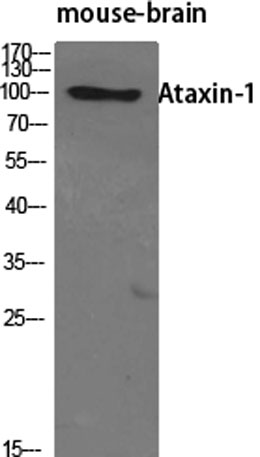
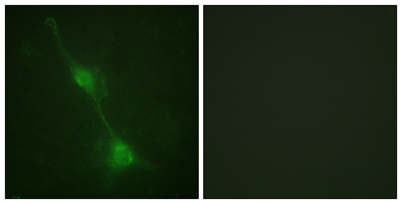
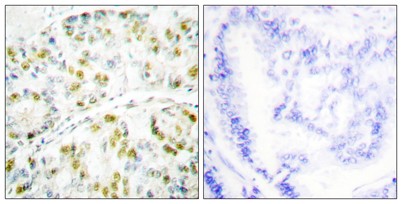
Ataxin-1 rabbit pAb
一鍵復(fù)制產(chǎn)品信息
ES1718
規(guī)格: 價格:
50μL ¥1280.00
100μL ¥1980.00

Overview

Product name: Ataxin-1 rabbit pAb
Reactivity: Human;Mouse
Alternative Names: ATXN1; ATX1; SCA1; Ataxin-1; Spinocerebellar ataxia type 1 protein
Source: Rabbit
Dilutions: Immunohistochemistry: 1/100 - 1/300. Immunofluorescence: 1/200 - 1/1000. ELISA: 1/5000. Not yet tested in other applications.
Immunogen: The antiserum was produced against synthesized peptide derived from human Ataxin 1. AA range:742-791
Storage: -20°C/1 year
Clonality: Polyclonal
Isotype: IgG
Concentration: 1 mg/ml
Observed Band: 87kD
GeneID: 6310
Human Swiss-Prot No: P54253
Cellular localization: Cytoplasm . Nucleus . Colocalizes with USP7 in the nucleus. .
Background: ataxin 1(ATXN1) Homo sapiens The autosomal dominant cerebellar ataxias (ADCA) are a heterogeneous group of neurodegenerative disorders characterized by progressive degeneration of the cerebellum, brain stem and spinal cord. Clinically, ADCA has been divided into three groups: ADCA types I-III. ADCAI is genetically heterogeneous, with five genetic loci, designated spinocerebellar ataxia (SCA) 1, 2, 3, 4 and 6, being assigned to five different chromosomes. ADCAII, which always presents with retinal degeneration (SCA7), and ADCAIII often referred to as the `pure' cerebellar syndrome (SCA5), are most likely homogeneous disorders. Several SCA genes have been cloned and shown to contain CAG repeats in their coding regions. ADCA is caused by the expansion of the CAG repeats, producing an elongated polyglutamine tract in the corresponding protein. The expanded repeats are variable in size and unstable, usually increasing in size when transmitted
關(guān)閉

在線咨詢

Online consultation

  • 在線咨詢
  • 技術(shù)支持

關(guān)注微信公眾號

微信掃一掃立即咨詢

微信掃一掃立即咨詢

關(guān)閉